

AI food scan
How Accurate Are AI Calorie Counters?
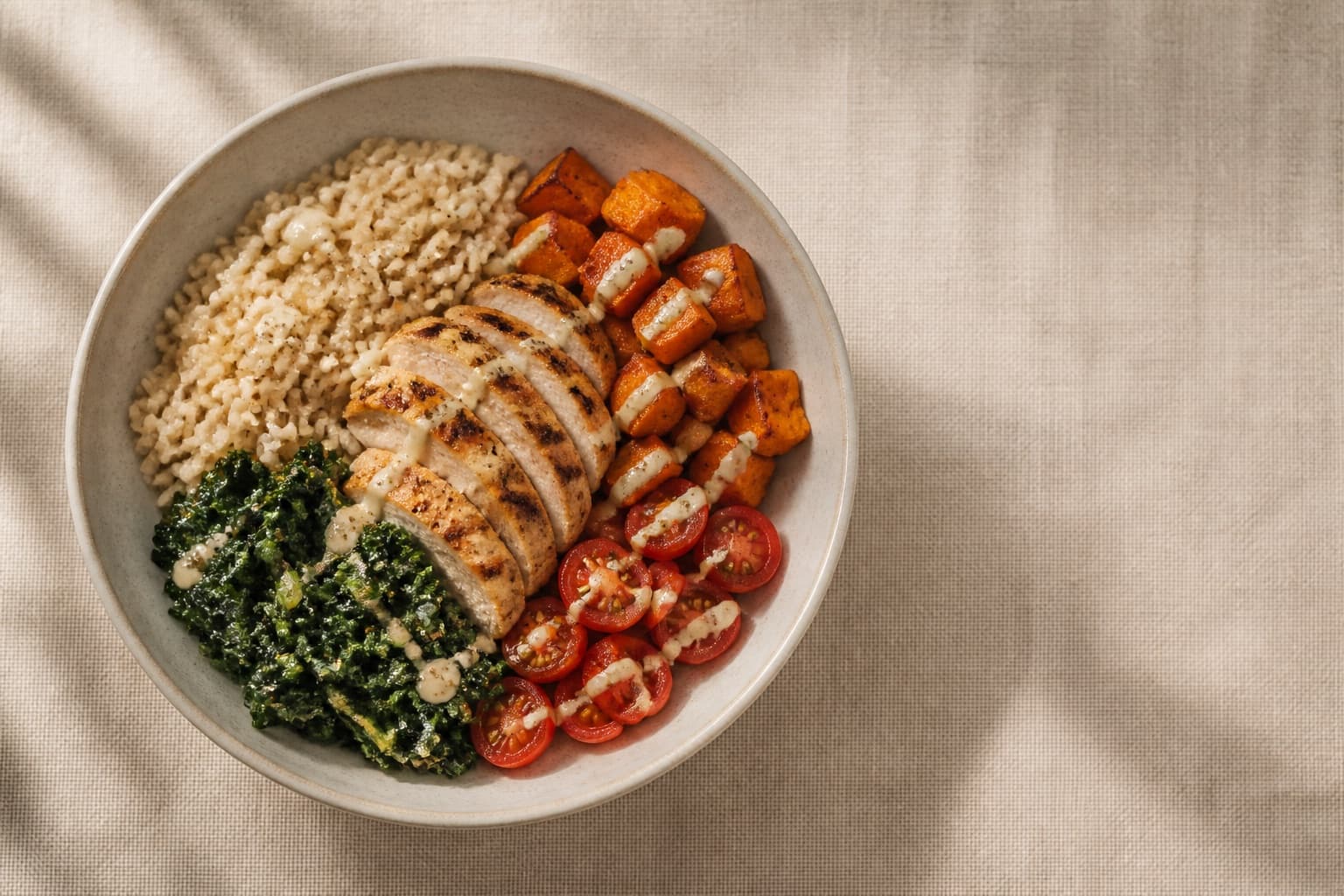
The honest reason people quit calorie tracking isn’t willpower. It’s friction. You can scan the barcode on a protein bar, but you can’t scan a burrito bowl, and you’re not going to pull out a food scale at a restaurant. AI photo scanning exists for exactly that gap: a fast estimate of the meals you can’t scan or weigh, so you keep tracking instead of guessing.
Most real meals can’t be scanned or weighed
A barcode and a kitchen scale are precise, but they only cover a slice of what people actually eat. Look at a normal week and most meals fall on the other side of the line:
| You can log it exactly | You can only estimate | |
|---|---|---|
| Where | At home, from packages | Restaurants, takeout, someone else's cooking |
| The food | Labeled items; single ingredients you weigh | Mixed bowls, plates, sauces, shared dishes |
| The method | Barcode or food scale | A photo estimate |
| How often | A minority of meals | Most of them |
So the real choice isn’t estimate vs. exact. It’s a rough number you’ll actually log vs. a perfect number you won’t. Left to guess, people underestimate restaurant meals, sometimes by 500 calories or more, so a structured estimate beats eyeballing it. AI scanning is built for that.
You can’t weigh a restaurant plate. You can photograph it.
How AI estimates a meal from a photo
A photo scanner does three things in a couple of seconds:
- Identifies the foods on the plate, the part AI is genuinely good at.
- Estimates each portion from the size cues in the image.
- Adds up the calories and macros for the whole meal.
The first step is the reliable one; the second is where the guesswork lives. In image-based tools, portion size is the hardest part to estimate from a photo, which is why the best scanners make the portion easy to correct.
Is a photo estimate accurate enough to stay on track?
For staying on track, yes, because weight change follows your trend over weeks, not any single meal. The research repeatedly links consistent food tracking to greater weight loss, and an estimate that’s off by a roughly consistent amount still shows you the direction and the pace, which is what you actually act on.
The move isn’t chasing a perfect number. It’s a consistent one you’ll keep logging. Correct the portions on the meals that matter most, and let the rest be a good estimate.
How to get a more accurate estimate from a photo
Five habits close most of the gap between a rough guess and a number you can trust:
- Shoot at an angle, not straight down. A ~45° angle gives the model depth cues so it estimates volume better.
- Include a size reference. A fork, hand, or standard plate in frame helps calibrate scale.
- Itemize mixed dishes. Confirm each component rather than accepting one lumped “bowl” estimate.
- Correct the portion. If you know it was two cups, say so. A five-second edit beats a confident wrong number.
- Add the invisible fats. Log the oil or butter it was cooked in; it’s the most common thing a photo misses.
Where Countwell fits
Countwell treats a photo as a fast first draft you can correct in a tap, not a number you’re stuck with. Restaurant meals get logged item by item instead of as one opaque total, and the numbers come from a live nutrition database (FatSecret). You get the speed of scanning with the honesty of an estimate you can adjust.
Frequently asked questions
- Do I need to weigh my food to count calories?
- No. Weighing is the most precise method, but it's impractical for most meals, and being tedious is the main reason people quit tracking. A good estimate you keep logging beats a perfect number you abandon, because results come from consistency over time.
- How accurate is a calorie estimate from a photo?
- It's close for simple, single foods and wider for mixed dishes with hidden fats and sauces. It's accurate enough to track your trend, and you can tighten any meal by confirming the portion size, the biggest single source of error.
- Why do two apps give different numbers for the same photo?
- Different food databases and different portion assumptions. One app might assume a large restaurant serving while another estimates a smaller home portion. That's why being able to correct the estimate matters more than the first guess.
- Can AI estimate restaurant and takeout meals?
- Yes. That's exactly where it shines, because there's no barcode to scan and no way to weigh the plate. Itemizing the meal by confirming each component gives you the most reliable estimate.