

Calories & weight loss
How Many Calories Should Each Meal Be?
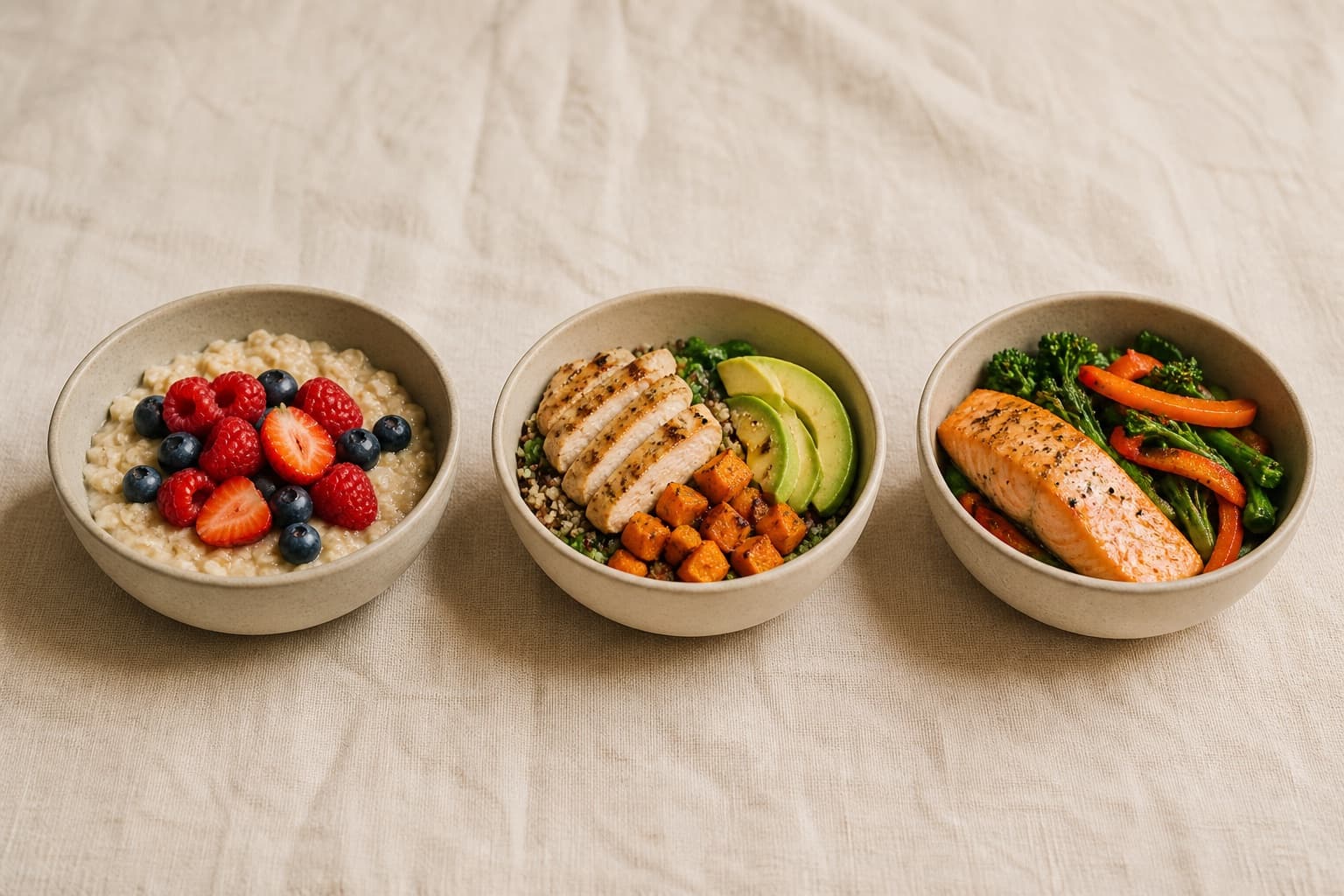
How many calories each meal should be depends entirely on your daily calorie total and how you like to divide it. There is no magic per-meal number that fits everyone, because a meal is only ever a slice of the day. Someone eating 1,500 calories and someone eating 2,500 will have very different plates, and both can be perfectly correct. Once you know your daily target, splitting it is the easy part.
So how many calories should one meal be?
The honest answer is that it depends on your daily total, and a good default is roughly a quarter to a third of that total per main meal. Start from the day, not the meal. If your target is 2,000 calories and you eat three meals plus a snack, a natural split lands each main meal somewhere around 500 to 600 calories, with the remainder in snacks. Change the daily number or the number of meals and every per-meal figure changes with it.
Not sure of your daily total yet? That is the number to pin down first. Our guide to a calorie deficit diet walks through estimating your maintenance calories and setting a target. Everything on this page assumes you already have that figure, because per-meal math is meaningless without it.
What do the splits look like for common targets?
Here is one reasonable way to divide four common daily targets across three meals and a snack. This uses roughly 25 percent at breakfast, 30 percent at lunch, 30 percent at dinner, and 15 percent in snacks. It is a starting template, not a rule. Shift the weight toward whichever meals you enjoy most.
| Daily target | Breakfast | Lunch | Dinner | Snacks |
|---|---|---|---|---|
| 1,500 kcal | ~375 | ~450 | ~450 | ~225 |
| 1,800 kcal | ~450 | ~540 | ~540 | ~270 |
| 2,000 kcal | ~500 | ~600 | ~600 | ~300 |
| 2,500 kcal | ~625 | ~750 | ~750 | ~375 |
If you skip breakfast, fold its share into lunch and dinner. If you graze, spread the snack allowance across the day. The totals are what count. A split that ignores when you are actually hungry is one you will not keep.
Your body settles up at the end of the day, not after each plate.
Does it matter how I split calories across meals?
For weight, not much, as long as the daily total is the same. When researchers hold calories constant and change how they are divided, the scale responds to the total rather than the arrangement. A randomized trial found that meal frequency did not change weight loss in women on a matched calorie deficit, and a broader review concluded there is little evidence that meal timing itself drives weight change independent of total intake.
This tracks with how energy balance works. The NHLBI frames weight change as calories in versus calories out across the day, not meal by meal. So spread your calories in whatever pattern keeps you comfortable and consistent. That freedom is the point: the best split is the one you will actually follow.
Should breakfast, lunch, or dinner be the biggest?
Make your biggest meal whichever one you look forward to most, because the weight-loss evidence for a particular order is weak. There is some signal that front-loading calories earlier in the day can help with hunger: one controlled study found a morning-loaded diet left people feeling less hungry, without changing energy expenditure or weight loss. Useful if you struggle with evening cravings, but not a requirement.
For most people the practical answer is to put more of the day’s calories where the meal matters most to them. If dinner is family time, keep dinner generous and trim breakfast. If a big breakfast sets you up for the day, do that. Fit the calories to your life rather than forcing your life around a chart.
How many meals should I eat?
As many as suit you, because meal frequency does not change weight loss when calories are equal. The old idea that frequent small meals stoke your metabolism has not held up. In the randomized trial above, three meals and six meals produced the same weight loss on a matched deficit.
Pick the pattern that fits how you get hungry and how your day runs:
- Three square meals if you prefer structure and larger, more satisfying plates.
- Two meals or a later first meal if you are not hungry in the morning.
- Smaller, frequent meals if grazing keeps you steadier and less likely to overeat.
None of these has a metabolic edge. The right number is the one that keeps you full and consistent.
What actually matters at each meal?
Composition, more than the exact calorie count. A meal that hits its calorie number but leaves you hungry an hour later works against you; one that keeps you full for the same calories makes the whole day easier. Two things do most of that work.
- Protein at every meal. Protein is the most filling macronutrient and protects muscle in a deficit. A systematic review linked higher protein intake to greater fullness and less hunger. Aim for a solid protein source on each plate.
- Fiber and volume. Vegetables, fruit, legumes, and whole grains add bulk for few calories, and higher fiber intake is associated with better weight-loss outcomes. They let a meal feel large while staying within its share of the day.
Get protein and fiber into each meal and the calorie split mostly takes care of itself. And if the scale jumps after a big or salty meal, that is normal water weight, not a sign your split was wrong, which we explain in why the scale rises in a deficit.
Frequently asked questions
- How many calories should each meal be to lose weight?
- It depends on your daily target. A common approach is a quarter to a third of your daily calories at each main meal, with the rest in snacks. On a 1,500 calorie plan that is roughly 375 to 450 per meal; on 2,000 it is closer to 500 to 600. Set the daily number first, then divide.
- Is it better to eat one big meal or several small ones?
- For weight loss it makes little difference when the daily calories are the same. Studies find meal frequency does not change results on a matched deficit. Choose the pattern that keeps you full and fits your day, whether that is a few large meals or several smaller ones.
- Does meal timing affect weight loss?
- Only marginally. When total calories are held constant, timing has little direct effect on weight. Eating earlier may help some people feel less hungry, which can aid consistency, but the daily total is what actually drives fat loss.
- Should my dinner be my smallest meal?
- Not necessarily. There is no strong evidence that a smaller dinner improves weight loss on its own. Put more of your calories at whichever meal matters most to you. If evening cravings are a problem, shifting some calories earlier may help, but it is a preference, not a rule.
- How many calories should a snack be?
- Whatever fits the calories left after your meals, often around 100 to 300. If you plan three meals plus snacks, budgeting roughly 15 percent of your daily total for snacks is a reasonable starting point. A protein or fiber-rich snack will hold you better than the same calories in sweets.