

Guides
How Much Protein Do You Need Per Day?
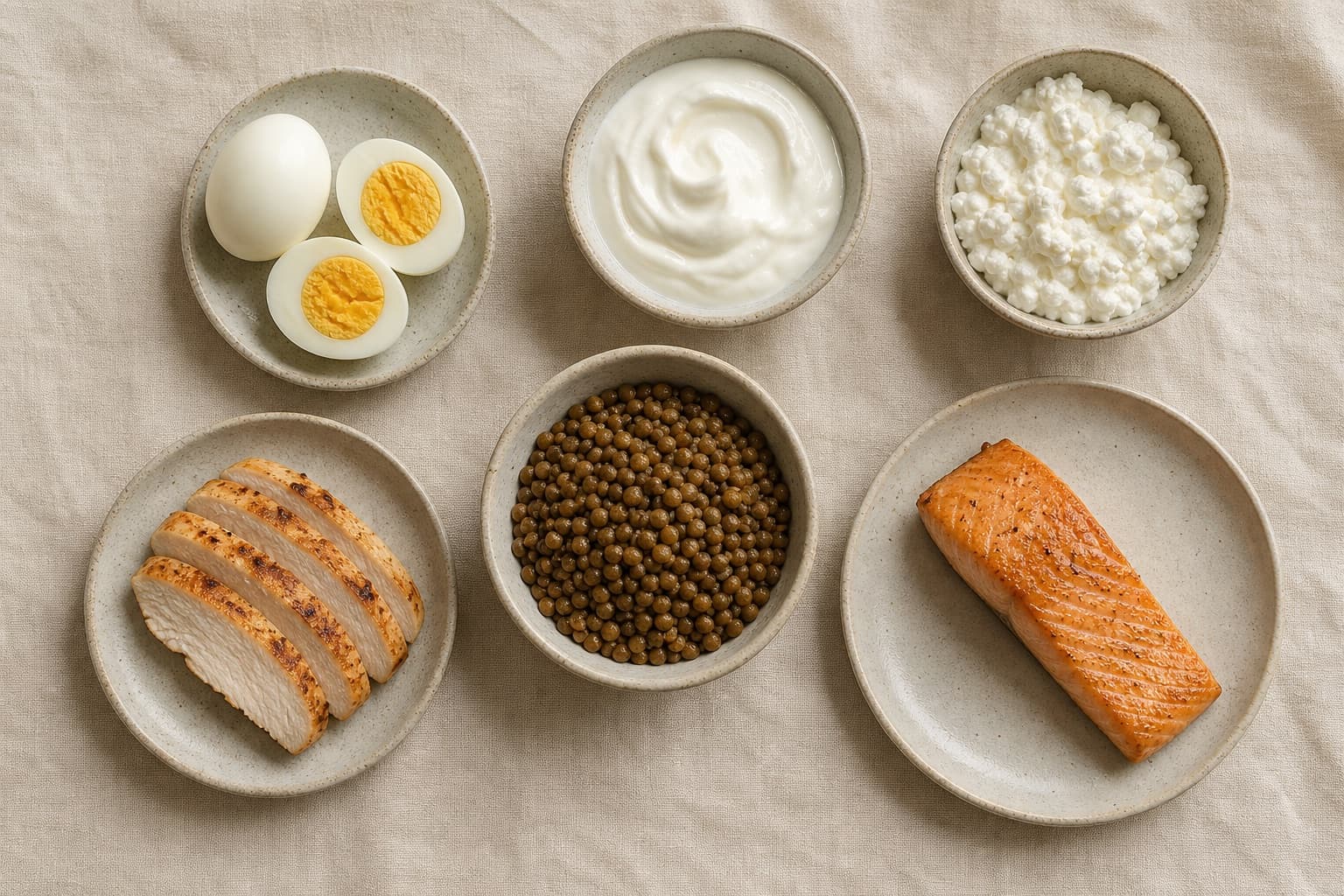
How much protein do I need is one of the most-searched nutrition questions, and the honest answer is that it depends on what you are asking it to do. There is a floor set by the government to keep you healthy, and there is a higher range that the research links to keeping muscle, losing fat, and feeling full. Most people who care enough to ask are aiming for the second one.
What is the recommended daily protein intake?
The Recommended Dietary Allowance (RDA) for protein is 0.8 grams per kilogram of body weight per day for adults. For a 70 kilogram (154 pound) person that is about 56 grams a day. This is the number on nutrition panels and in most government guidance, and it comes from the National Academies Dietary Reference Intakes.
Here is the catch that trips people up: the RDA was set as the amount that prevents deficiency in nearly all healthy adults. It answers “how little can I get away with,” not “how much is best.” That same review argues the 0.8 figure is a minimum, and that many people benefit from more. If your goal is to build or keep muscle, lose fat, or age well, the RDA is the wrong target.
The RDA is the amount that keeps you from getting sick, not the amount that helps you thrive.
How much protein do active people need?
More than the RDA. The International Society of Sports Nutrition position stand on protein concludes that an intake of 1.4 to 2.0 grams per kilogram per day is enough for most people who train to build and maintain muscle. That is nearly double the RDA.
A large meta-analysis of 49 studies found that protein intake supported gains in muscle up to about 1.6 grams per kilogram per day, after which the extra added little for the average lifter. Because people vary, the practical range most coaches quote is 1.6 to 2.2 g/kg, with the top of that band as a sensible ceiling for a hard-training person.
How much protein should you eat to lose weight?
When you are in a calorie deficit, protein does two useful things: it protects the muscle you would otherwise lose, and it keeps you fuller on fewer calories. In one trial, a higher-protein diet preserved more lean mass and left dieters more satisfied than a standard-protein one at the same calories. Broader reviews find that protein in the range of 1.2 to 1.6 g/kg supports fat loss while preserving lean mass and controlling appetite.
For most people dieting while training, 1.6 to 2.2 g/kg is a safe, effective target. The leaner you are and the steeper your deficit, the more it is worth pushing toward the top of that range. Whichever number you pick, protein is the macro to guard first. Our guide on counting macros vs calories explains why it earns that priority.
How much protein is in common foods?
Targets are easier to hit when you know what a portion actually delivers. These are approximate values from USDA FoodData Central, rounded to whole grams:
| Food | Typical serving | Protein |
|---|---|---|
| Chicken breast, cooked | 3 oz (85 g) | 26 g |
| Salmon, cooked | 3 oz (85 g) | 21 g |
| Canned tuna in water | 3 oz (85 g) | 20 g |
| Lentils, cooked | 1 cup | 18 g |
| Greek yogurt, plain nonfat | 3/4 cup (170 g) | 17 g |
| Black beans, cooked | 1 cup | 15 g |
| Cottage cheese, low-fat | 1/2 cup | 12 g |
| Firm tofu | 1/2 cup | 10 g |
| Milk, 1% | 1 cup | 8 g |
| Quinoa, cooked | 1 cup | 8 g |
| Large egg | 1 egg | 6 g |
| Almonds | 1 oz (about 23) | 6 g |
How do you actually hit your protein target?
The number can look intimidating until you break it across the day. A 70 kilogram person aiming for 1.6 g/kg needs about 112 grams. Spread over three or four meals, that is 25 to 40 grams each, which is one palm-sized serving of a main protein plus a supporting food. A few habits close the gap:
- Anchor every meal with a protein. Decide the protein first, then build carbs and vegetables around it, instead of adding protein as an afterthought.
- Front-load breakfast. It is the meal people most often skimp on. Eggs, Greek yogurt, or cottage cheese get you 20 grams before the day starts.
- Keep fast options on hand. Greek yogurt, a tin of tuna, edamame, milk, or a protein shake turn a snack into 15 to 25 grams with no cooking.
- Lean on volume for plant-based days. Beans, lentils, tofu, and tempeh add up, but the portions are larger, so plan for two or three servings across the day.
- Track it for a week. Almost everyone guesses low. Logging a few days shows you exactly where the gap is, usually breakfast and snacks.
Can you eat too much protein?
For healthy people, the usual fear is overblown. The ISSN position stand reports that high-protein diets, in the ranges discussed here and higher, do not harm kidney function or bone health in healthy individuals. The one real caveat: if you already have kidney disease, protein needs are a medical decision, so talk to your doctor rather than following a general guide.
There is a ceiling of usefulness, not of safety. Past roughly 1.6 g/kg the extra protein does less for muscle for most people, and beyond about 2.2 g/kg you are mostly spending calories that could go elsewhere. More is not better once you are in range, it is just more.
Frequently asked questions
- How much protein do I need per day to build muscle?
- Research supports about 1.6 to 2.2 grams of protein per kilogram of body weight per day for building and keeping muscle. A large meta-analysis found gains leveled off around 1.6 g/kg for the average trainee, so most people do well toward the lower end of that range paired with resistance training.
- Is 0.8 grams per kilogram enough protein?
- It is enough to avoid deficiency, which is what the RDA was designed for. It is not the ideal amount if your goal is building muscle, losing fat, or preserving strength as you age. Active people and dieters generally do better between 1.4 and 2.2 g/kg.
- How much protein is that in grams for me?
- Multiply your body weight in kilograms by your target. A 70 kg (154 lb) person at 1.6 g/kg needs about 112 grams a day. To convert pounds to kilograms, divide by 2.2. Spread the total across three or four meals so each one lands around 25 to 40 grams.
- Can I get enough protein on a plant-based diet?
- Yes, it just takes more planning because plant portions are larger per gram of protein. Lentils, beans, tofu, tempeh, edamame, and soy milk are the workhorses. Eat two or three servings across the day and combine varied sources, and hitting a higher target is very doable.
- Is too much protein bad for your kidneys?
- For healthy people, no. The ISSN position stand reports that high-protein diets do not harm kidney function or bone health in healthy individuals. If you already have kidney disease, protein needs are a medical decision, so ask your doctor rather than following a general recommendation.