

Guides
How to Count Calories: The Complete Guide
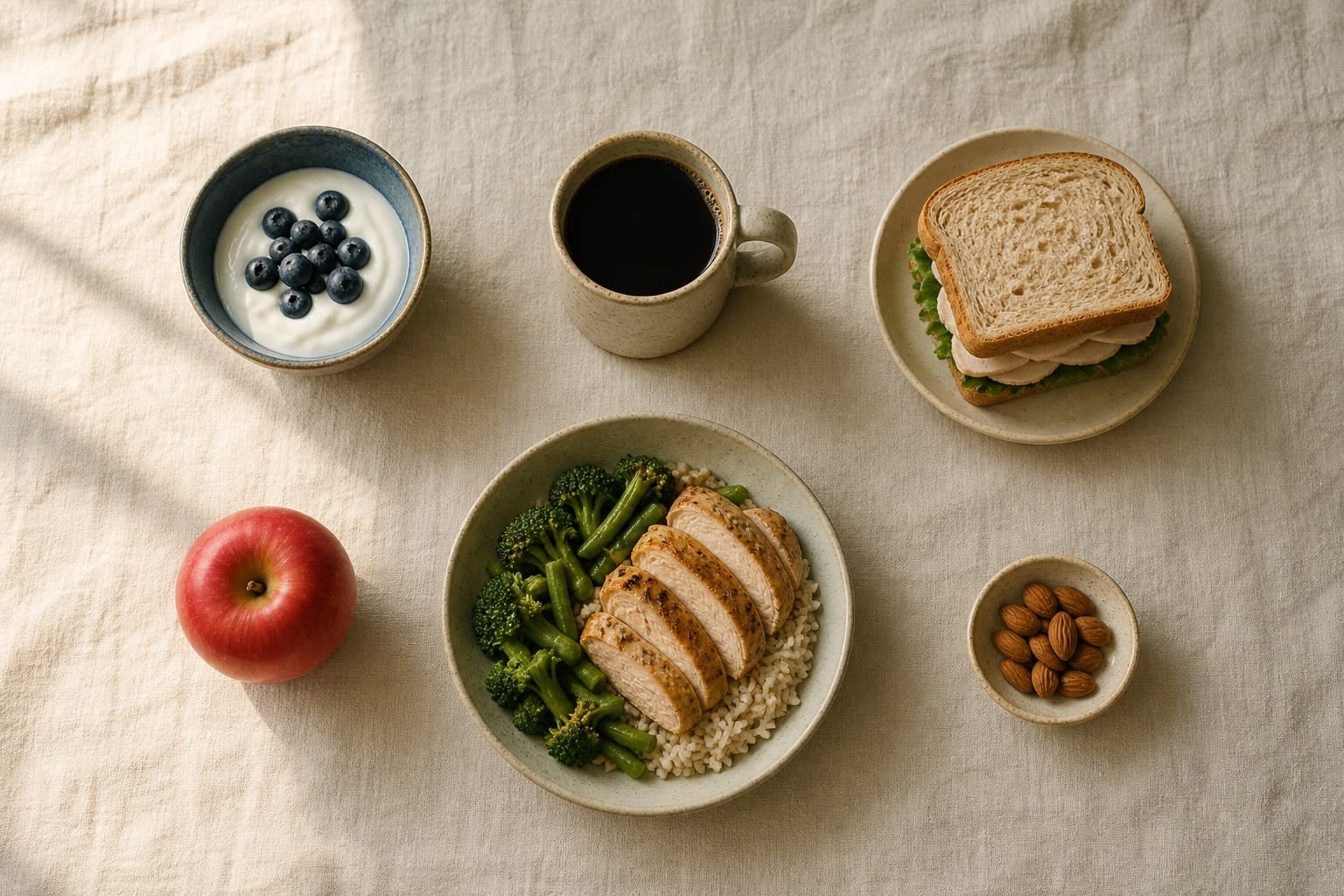
Learning how to count calories takes about a week of practice and then mostly stops being work. The method itself is short: set a daily target, log what you eat, and read the trend every few weeks. What trips people up is never the arithmetic. It is the cooking oil nobody logs, the database entry that does not match the food in front of you, and the restaurant plate you have no way to weigh. This guide covers all of it, roughly in the order you will run into it.
What does counting calories actually do?
It turns eating from a guess into a number you can act on. Body weight follows the balance between the energy you take in and the energy you use (National Heart, Lung, and Blood Institute), and almost nobody can feel that balance accurately from the inside. Logging gives you a running total, so the difference between a day that fits your target and a day that blows past it is visible instead of vague.
The habit also does something less obvious. A systematic review of behavioral weight-loss studies found that people who kept dietary records more consistently and more completely lost more weight than those who logged patchily, across every study that measured it (Burke et al., 2011). The review is careful about why, and so are we: the act of writing food down changes what you choose before the number ever gets added up.
Counting is a measurement, and a rough one. Treat it like a bank statement rather than a report card and it works much better.
How many calories should you eat a day?
Start from your maintenance calories and subtract a modest amount. Maintenance is roughly what you burn in a day, which you can estimate from your height, weight, age, and activity level with the Mifflin-St Jeor equation (Mifflin et al., 1990). Our free TDEE calculator runs that equation for you in a few seconds.
From there, a cut of roughly 10 to 20 percent below maintenance is the range most people can hold without their week falling apart. The CDC puts a steady 1 to 2 pounds a week in the range that tends to stick. Bigger cuts mostly fail because hunger eventually collects the difference. For the full version of this math, including how to set the size of the deficit and adjust it later, see the calorie deficit guide.
Whatever number you land on, treat it as a hypothesis rather than a fact. It came out of an equation built on population averages, and your actual expenditure may sit a couple of hundred calories either side of it. Three or four weeks of honest logging and a scale trend will tell you which way to nudge it.
How do you count calories, step by step?
Here is the whole routine. It reads longer than it plays out; after a few days the first five steps take under a minute a meal.
- Set a daily target. One number for the day. Do not bother splitting it into meal-by-meal budgets yet.
- Pick one tracker and keep it within reach. The best app is the one you will open at the table. Switching apps every few weeks is its own kind of not-tracking.
- Log the meal while you eat it. Reconstructing a day at bedtime is where most of the missing calories go. Memory rounds down, reliably.
- Weigh what is dense, estimate what is bulky. Oil, butter, cheese, nut butter, nuts, and dry grains move a total. Lettuce does not.
- Log the extras. Cooking oil, salad dressing, milk in coffee, the beer, the handful of chips standing at the counter. These are small individually and large in aggregate.
- Save the meals you repeat. Most people eat a fairly short rotation. Save your usual breakfast once and it becomes a single tap forever after.
- Judge it weekly. Look at the weekly average against your target and the scale trend over three or four weeks. A single day tells you almost nothing.
What do you need to count calories?
A tracker, and ideally a cheap digital kitchen scale. That is the real list. Everything below is about picking the right tool for a given food rather than buying more equipment.
| Tool | Best for | How exact it is |
|---|---|---|
| Digital kitchen scale | Anything you portion yourself at home | The most exact option available to you. Grams beat cups, because volume changes with how tightly a food packs. |
| Barcode scanner | Packaged food | Exact to the label, which is itself allowed a margin (see below). |
| Database search | Generic foods and chain restaurant items | Good, as long as you pick a well-matched entry instead of the first result. |
| AI photo scan | Restaurant plates, other people's cooking, shared dishes | An estimate, and the fastest way to log food you cannot weigh. Confirm the portions it guesses. |
| Measuring cups and spoons | Oils, sauces, milk, liquids generally | Fine for liquids. Unreliable for solids like rice, oats, or peanut butter. |
| Hand and plate estimates | Any meal, no tools at all | Roughest of the lot, but a consistent rough estimate still tracks a trend. |
The scale earns its place quickly. Poured olive oil is the single most underlogged item in home cooking at roughly 120 calories a tablespoon, and a generous pour is easily two. Weighing takes four seconds and removes a couple of hundred calories of daily guesswork.
How accurate does calorie counting need to be?
Close and consistent, which is a lower bar than most beginners assume and a different bar than they aim for. Perfect accuracy is not available even in principle, because the numbers you are copying from are themselves approximations.
Start with packaged food. Under US labeling rules, a product is compliant as long as its measured calorie content is not more than 20 percent above the value printed on the box (21 CFR 101.9(g)). The label is a good-faith figure with a legal tolerance around it, not a measurement of the specific item in your hand.
Restaurants are looser again. When researchers ran laboratory analyses on 269 menu items from 42 chains, the stated calories were accurate on average, but 19 percent of individual items came in at least 100 calories above what the menu claimed, and lower-calorie dishes skewed high in particular (Urban et al., JAMA 2011). Order the 500-calorie salad and you are probably eating more than 500 calories.
The label already carries a legal margin of error, so chasing a perfect count is chasing something that does not exist.
And then there is the largest source of error, which is us. In a classic study, people who were convinced they could not lose weight despite eating very little reported an average of 1,028 calories a day. Doubly labeled water, the gold-standard measure, put their actual intake at 2,081. They were not lying; they were underreporting by about 47 percent without knowing it.
That gap is the thing a food log closes, and it closes further once you weigh the dense items and log the extras instead of rounding them away. What you end up with is a measurement taken the same way every week, which is what lets the trend mean something.
How do you count calories for meals you cannot measure?
Estimate them deliberately instead of skipping them. A skipped meal is recorded as zero calories, which is the single worst number you could enter. An estimate that is 15 percent off is far more useful than an omission that is 100 percent off.
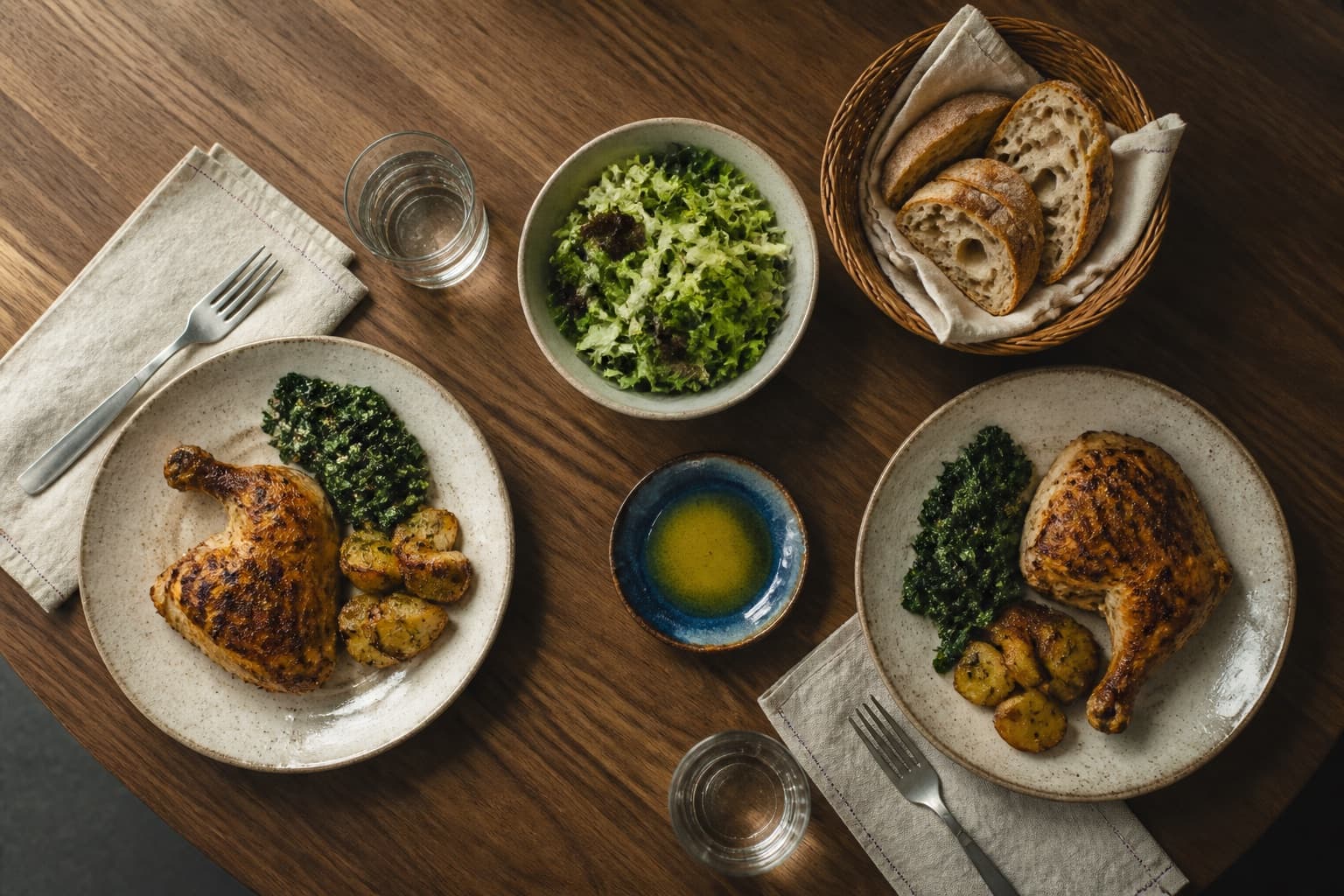
You have three reasonable options, roughly in order of how much information you have:
- Published menu numbers, adjusted up a little. Chains publish real data. Given the JAMA findings above, rounding up modestly on smaller dishes is more honest than taking the number flat.
- A close database match. For independent restaurants, find a generic entry for the same dish and portion it by eye. Pick the entry that matches how the food was cooked, not just what it is called.
- A photo scan. Point a camera at the plate and let the app identify the components and estimate the portions, then adjust what looks wrong. Portion size is where the guesswork lives, which we covered in how accurate AI calorie counters are.
Home cooking sits in between: you cannot weigh a finished casserole meaningfully, but you did control every ingredient that went into it. Build the dish once as a recipe, set the number of servings, and log your plate as a fraction of the pot. Counting calories when cooking at home walks through that method, including why you weigh ingredients raw rather than cooked.
What are the most common calorie counting mistakes?
Most of them are logging errors rather than diet errors, which makes them cheap to fix once you know what to look for.
| Mistake | What to do instead |
|---|---|
| Not logging cooking oil or dressing | Weigh or measure it. Fat is the densest thing in the kitchen and the easiest to pour past. |
| Weighing food cooked, logging it raw | Match the entry to the state you weighed. Cooking changes weight without changing calories, in both directions. |
| Taking the first database result | Check that the entry matches the food and the cooking method. Crowd-sourced entries are frequently wrong. |
| Measuring solids by volume | Weigh them. A cup of oats, rice, or peanut butter varies by how it is packed; a gram does not. |
| Logging at bedtime from memory | Log as you eat. Recall consistently rounds portions down and drops small items entirely. |
| Logging weekdays and abandoning weekends | Log the whole week. Two loose days can pull a tidy five-day average back to maintenance. |
| Eating back everything a watch says you burned | Treat exercise burn as a rough bonus, not budget. Wearable estimates run high. |
| Chasing gram-level precision on vegetables | Estimate them and move on. Fussiness is the most common reason people quit within a month. |
Should you count macros as well?
Not at first. Calories decide the direction of the scale, so start there and add macros later if you have a reason to. The usual reason is protein: it protects muscle while you are losing weight and it keeps you fuller per calorie, which makes the target easier to hit. How much protein you actually need covers the ranges, and counting macros versus counting calories covers who benefits from tracking both.
How long do you need to count calories?
Long enough to learn what your normal portions cost, which for most people is a few months rather than forever. Counting is a training exercise as much as a control system. After a while you know that your usual breakfast is around 450 calories and that the takeout you order is nearer 1,100 than 700, and that knowledge does not expire when you close the app.
Plenty of people then move to spot-checking: logging fully for a week when the scale drifts, or when their habits change, and otherwise eating from what they learned. Others keep logging indefinitely because the daily feedback is what keeps them consistent. Both are fine. The trap is stopping while still believing you have a good sense of what you eat, which the research above suggests almost nobody does.
While you are counting, read the scale properly. Weight moves with water, salt, sleep, and where you are in the week, so a flat or rising number for a few days means very little. Why the scale goes up in a calorie deficit explains what normal noise looks like and when a stall is real.
Where Countwell fits
Countwell is built for the version of counting described above rather than the maximalist one. The food log is one chronological stream, so a coffee sits next to a dinner without any meal-sorting ceremony. Nutrition numbers come from a live database (FatSecret) instead of a stale local copy. Meals you repeat get saved and logged in a tap, recipes split by servings, and a photo scan handles the restaurant plates you cannot weigh. Macros and weight trends are there when you want them and out of the way when you do not.
If you are choosing a tracker to start with, our roundup of the best MyFitnessPal alternatives compares the main options on what stays free, which matters more than feature counts when you are starting out.
Frequently asked questions
- How do I start counting calories as a beginner?
- Estimate your maintenance calories, subtract about 10 to 20 percent, and use that as a daily target. Then pick one tracker, log every meal as you eat it, and weigh the dense items like oil, cheese, and dry grains. Do not split the target into per-meal budgets in week one. Get a full day logged honestly first, and refine after three or four weeks of scale data.
- Do I need a food scale to count calories?
- Not strictly, but it is the cheapest accuracy you can buy. Volume measures are unreliable for solids because a cup of oats or peanut butter changes with how tightly it is packed, while grams do not. If you only use a scale for oil, butter, cheese, nut butter, nuts, and dry grains, you have covered most of the error in a typical home-cooked meal.
- How accurate are the calorie counts on labels and restaurant menus?
- Less exact than they look. US labeling rules allow a packaged food to contain up to 20 percent more calories than the label declares and still be compliant (21 CFR 101.9). For restaurants, a JAMA analysis of 269 menu items found stated calories were accurate on average, but 19 percent of items contained at least 100 calories more than stated, with lower-calorie dishes skewing high.
- Do I have to count calories every single day?
- No, but consistency matters more than perfection. Progress is driven by your weekly average, so five tracked days and two untracked ones can quietly average back to maintenance. If you are going to log part-time, log the days you eat least predictably rather than the days that are easy to log.
- What should I do if I forget to log a meal?
- Estimate it and enter it anyway. A skipped meal is recorded as zero calories, which is a much larger error than a rough guess. Pick a close database entry, estimate the portion, and move on. The point of the log is a usable weekly total, not a perfect diary.
- How long does it take to see results from counting calories?
- Give it three to four weeks before you judge anything. Day-to-day weight moves with water, salt, sleep, and digestion, so a week of flat or rising numbers is normal noise rather than a failed deficit. If your logged average sits clearly below maintenance for a month with no trend change, the log is more likely missing calories than your metabolism is broken.