

Guides
Counting Macros vs Counting Calories
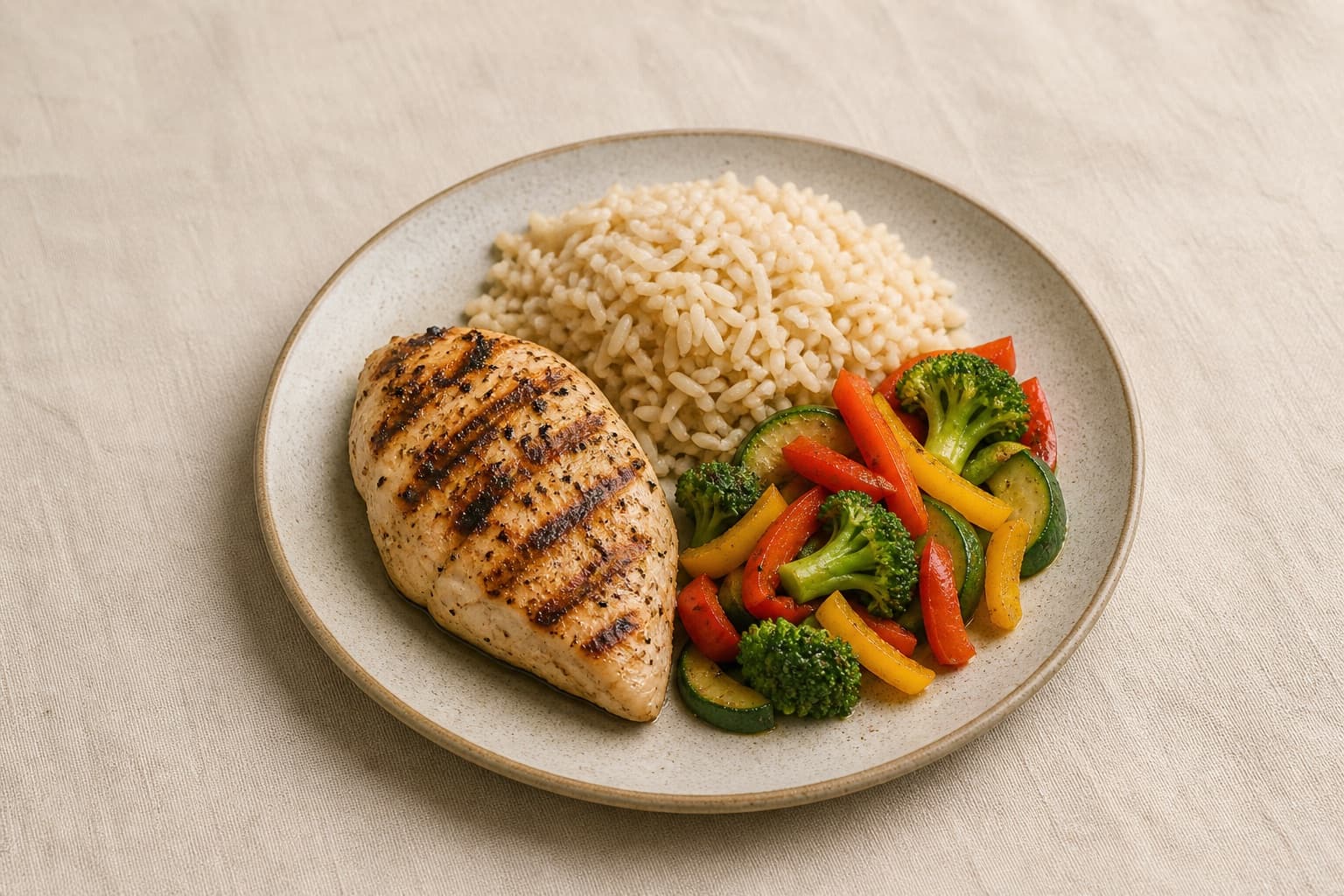
The choice between counting macros vs calories comes down to a single question: do you want to change your weight, or change what your body is made of? Calories answer the first. Macros answer the second. They are not rivals, they are two zoom levels on the same food, and most of the confusion online comes from people arguing as if you have to pick a side.
What is the difference between counting calories and counting macros?
Counting calories tracks one number: total energy in. Counting macros tracks the three nutrients that make up those calories, and how many calories each one carries:
- Protein, 4 calories per gram. Builds and repairs muscle, and is the most filling of the three.
- Carbohydrate, 4 calories per gram. Your body’s default fuel, especially for hard training.
- Fat, 9 calories per gram. Needed for hormones and absorbing some vitamins, and the most calorie-dense, so small amounts add up fast.
Add up the calories from your macros and you get your total. That is the whole relationship: macros are the ingredients, calories are the sum. When you count calories you watch the total. When you count macros you watch the mix, and the total comes along for free.
Do calories actually drive weight loss?
Yes. Body weight follows energy balance: take in fewer calories than you burn and you lose weight, take in more and you gain. When researchers hold calories equal and change the macro split, the weight loss is roughly the same. In the two-year POUNDS LOST trial, 811 adults were assigned diets ranging from low-fat to high-protein to low-carb, all at a similar calorie deficit. The result: no meaningful difference in weight lost between the groups.
This is the part people skip past. A low-carb diet is not magic, and neither is low-fat. They tend to work when they put you in a calorie deficit, and they stop working when they do not. So if your only goal is to see the scale move, counting calories is enough, and it is the simpler habit to keep.
| Counting calories | Counting macros | |
|---|---|---|
| What you track | One number: total calories | Three numbers: protein, carbs, fat |
| Mainly controls | Weight up or down | Body composition and how full you feel |
| Effort | Lower: log food, watch a total | Higher: hit three targets, not just one |
| Best for | Losing or maintaining weight | Keeping muscle while cutting, or building it |
| Risk if ignored | You overeat without noticing | You lose weight but also lose muscle, or stay hungry |
| Learning curve | An afternoon | A week or two of paying attention |
Calories decide whether you lose weight. Macros decide whether it is fat or muscle you lose.
What do macros do that calories alone cannot?
Two things a plain calorie count misses: what you lose and how the diet feels. Both come down mostly to protein.
When you eat in a deficit, your body can pull the energy from fat or from muscle. Enough protein, paired with some resistance training, tilts that toward fat. In a study of women losing weight, a higher-protein diet preserved more lean mass and left people more satisfied than a standard-protein one at the same calories. Reviews of the wider evidence land in the same place: protein in the range of 1.2 to 1.6 grams per kilogram of body weight helps preserve lean mass and control appetite during weight loss.
Protein also costs more to digest. Your body burns roughly 20 to 30 percent of protein’s calories just processing it, versus 5 to 10 percent for carbs and almost nothing for fat, according to a review of diet-induced thermogenesis. It is not a huge effect, but it is real, and it is one reason two 1,800-calorie days can leave you feeling very different depending on the mix.
None of this breaks the calorie rule. A high-protein day still has to fit your calorie budget to cause fat loss. Macros do not override calories, they steer the result you get for a given calorie total.
Which should you count, macros or calories?
Match the tool to the goal. Most people do not need to count macros, and some clearly should.
Count calories if you mainly want to lose or maintain weight, you are new to tracking, or you know you will not keep up three targets. It is the lowest-friction habit that still works, and friction is the reason most people quit. If you get protein “pretty high” without measuring it, calories alone will carry you a long way.
Count macros if you lift and want to build or keep muscle, you are cutting and want to protect the muscle you have, you are an endurance athlete who needs to time carbs, or you keep losing weight but feel hungry and flat. In every one of those cases the problem is not the total, it is the mix, and only macros show you the mix.
A practical middle path: count calories, but set a protein floor. Track your total as usual, and treat protein as a target you try to hit each day while letting carbs and fat fall where they land. You get most of the body-composition benefit of macro tracking for a fraction of the effort. For how much protein to aim for, see our guide on how much protein you need per day.
Where Countwell fits
Countwell shows you both at once, so you never have to choose the wrong tool. Every entry logs calories and the full macro breakdown from a live nutrition database, and you can set a calorie goal, a protein floor, or full macro targets depending on where you are. Log a burrito bowl by photo or a barcode by scan, and the same entry answers “am I in a deficit” and “did I get enough protein” together. If you are curious how the photo estimates hold up, we wrote about how accurate AI calorie counters are. And if you are moving over from another tracker, here are some MyFitnessPal alternatives worth a look.
Frequently asked questions
- Is counting macros better than counting calories for weight loss?
- Not for weight loss on its own. Weight change follows calories, and controlled trials show similar weight loss across different macro splits at the same calorie deficit. Macros matter more for what you lose, protecting muscle, and for how full you feel, than for the number on the scale.
- Do I need to count both macros and calories?
- No, and most people should not bother with both. If you count macros accurately, the calorie total is already covered. A good middle ground is to count calories and set a protein target, then let carbs and fat fall where they land.
- If I only track one macro, which should it be?
- Protein. It is the macro that preserves muscle during a diet, keeps you fullest, and costs the most calories to digest. Carbs and fat can flex around your preference as long as your calories and protein are in range.
- Can you gain weight eating healthy foods if you count macros but not calories?
- Yes. Nuts, olive oil, and other nutritious foods are calorie-dense, so it is easy to overeat them without a calorie count. Macros tell you the mix but not always the total, which is why calorie awareness still matters for weight.
- Are all calories the same for weight loss?
- For weight change, calories behave similarly regardless of source. For appetite, muscle retention, and the small energy cost of digestion, the source matters, and protein is the standout. So calories drive the scale while the macro mix shapes the experience and the result.