

Eating out
How to Count Calories Eating Out (Without a Menu)
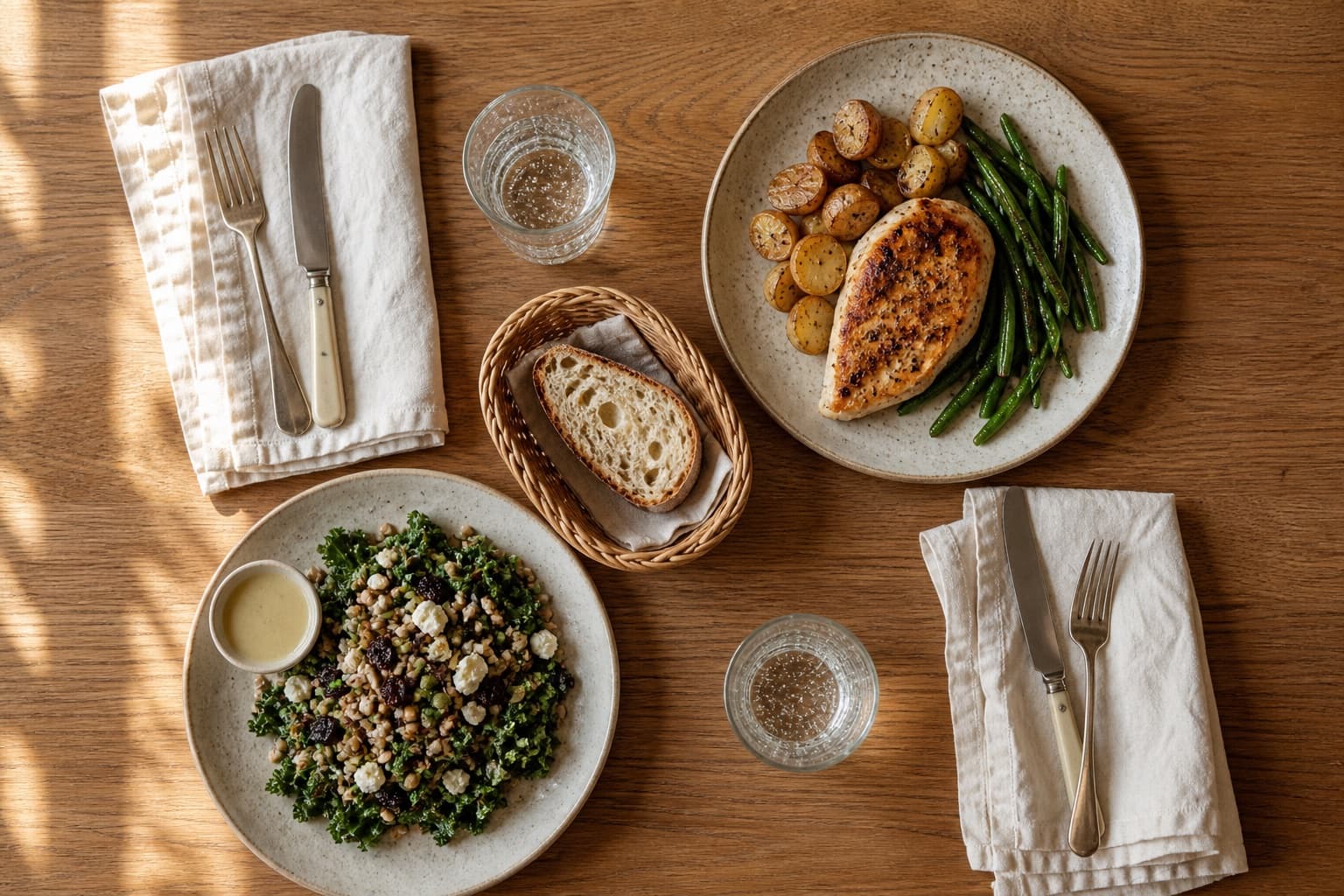
Counting calories eating out means estimating rather than measuring, which makes it a different job from logging at home. There is no barcode on a plate of pasta and no scale on the table, and at most restaurants there is no number on the menu either. What you can do is take the plate apart in your head, size each piece against something you carry with you, and add the fat the kitchen used but never mentioned. A minute of that beats skipping the meal in your log, which is what most people do.
Why doesn’t the menu tell you the calories?
Because the rule only reaches large chains. US menu labeling requires calorie counts on menus and menu boards at restaurants that are part of a chain with 20 or more locations, a requirement the FDA has enforced since May 2018. The local Thai place, the wine bar, the deli with two shops and the food truck outside all sit outside it. No number is required and usually none exists.
| Calories are posted | You have to estimate | |
|---|---|---|
| Where | Chains with 20 or more locations | Independents, small chains, trucks, catering |
| What you get | A figure per standard menu item | A description and a plate |
| The catch | It is an average, and your plate can run over it | No reference point at all |
| Your job | Adjust for what you added, swapped or left | Build the number up from the parts |
Even where numbers are posted they describe a standard preparation, not the plate in front of you. When researchers ran laboratory analyses on 269 menu items from 42 chains, stated calories were accurate on average, but 19 percent of items contained at least 100 calories more than stated, so a posted figure is better read as a starting point than a receipt.
How many calories is a typical restaurant meal?
More than almost anyone guesses. Researchers used bomb calorimetry on 157 meals from independent and small chain restaurants, the ones with no stated calorie information, and found a mean of 1,327 calories per meal, about 66 percent of a typical day’s energy requirement. The same meals ran 49 percent higher than comparable popular items at the largest national chains, and 19 percent higher than national food database entries for the equivalent dish.
The error runs one way. In a study of more than 3,000 diners leaving fast food restaurants, at least two thirds underestimated what they had just eaten, adults by 175 calories on average, and roughly a quarter of every group was off by 500 calories or more. Underestimation got worse as the meal got bigger, which is exactly backwards from what you want.
The meal you cannot weigh is usually the largest one of your day.
How do you estimate a meal you did not cook?
Take three passes at it, in this order. The order matters, because each pass is easier once the one before it is done.
- Name the parts. Say the plate as a list instead of a dish: chicken breast, roasted potatoes, green beans, a slice of bread, dressing. Five ordinary foods are far easier to estimate than one restaurant entree, and a list is something a food database can actually answer.
- Size each part against your hand. Your palm, fist and thumb travel with you and scale with your body. Restaurant plates are wide, usually 11 or 12 inches, so a portion that looks modest against the rim is often two servings.
- Add what the kitchen added. Oil in the pan, butter finishing the vegetables, dressing already tossed through the salad. This is the pass people skip, and it is the one worth the most calories.
| Hand cue | Roughly equal to | Typical calories |
|---|---|---|
| Palm, fingers excluded | 3 to 4 oz of cooked meat or fish | 150 to 250 |
| Cupped hand | About 1 cup of rice, pasta or potatoes | 200 to 250 |
| Fist | About 1 cup of cooked vegetables | 30 to 60 |
| Tip of your thumb | About 1 teaspoon of oil or butter | 35 to 40 |
| Whole thumb | About 1 tablespoon of oil, butter or mayo | 95 to 120 |
When two parts of the plate are equally uncertain, resolve both upward. A restaurant kitchen is cooking for flavor, not for your log, and the errors it introduces are almost never in your favor.
Where do the calories actually hide?
In fat you did not order and cannot see. A tablespoon of olive oil is 119 calories and a tablespoon of butter is 102, and a single entree can carry two or three tablespoons between the pan and the finish. Dressing works the same way: a standard two tablespoon serving of Caesar is 163 calories, and restaurants rarely stop at one serving.
The rest of the usual suspects are easier to catch once you know to look for them:
- Bread before the meal. Two slices with butter is a few hundred calories logged by nobody.
- Drinks. A 5 ounce glass of wine is about 120 calories by USDA figures, and refills are not free. Count the drink first, because it is the one number on the table you can be sure of.
- The shared appetizer. Log your share as a real portion rather than rounding it to zero because it arrived in the middle of the table.
- The last third of the plate. Finishing it is a decision. Make it deliberately or box it before you start.
Can you order in a way that makes the estimate easier?
Yes, and it does more for the estimate than anything you do afterwards. Every unknown you remove while ordering is one you do not have to guess at later.
- Ask for dressing and sauce on the side. Now you decide the amount, and an amount you decided is an amount you can count.
- Read the cooking verb. Grilled, roasted, steamed and poached sit at the low end. Crispy, creamy, glazed, smothered and pan seared all signal added fat or sugar.
- Ask how it is finished. Servers answer this constantly, and “butter at the end” is worth about 100 calories to know.
- Decide the portion before it arrives. Half now and half boxed is far easier to log than a plate you negotiate with while eating it.
- Log it before the food comes. You are more honest before the meal than after it, and you can still change the order.
How accurate does a restaurant estimate need to be?
Close enough to keep your weekly trend honest, which is a lower bar than most people assume. Weight change follows the trend across weeks, not any single dinner, and the research consistently ties consistent food tracking to greater weight loss. An estimate that is wrong by a similar amount every time still shows you the direction and the pace.
So the goal is a consistent bias, ideally a slightly generous one. If your restaurant estimates run a little high, your deficit survives the meals you cannot measure, and the days you cook at home stay as accurate as ever. If you want the underlying math, the calorie deficit guide covers setting the target, and our free TDEE calculator gives you maintenance calories to work from. For the home side of the equation, counting calories when cooking is where weighing actually pays off.
Where Countwell fits
Countwell is built for exactly the meals this post is about. A restaurant plate gets logged item by item rather than as one opaque entry, so you can fix the portion that is wrong without rebuilding the meal, and the numbers come from a live nutrition database (FatSecret) rather than a catalog we invented. Photo scanning gives you a first draft of the plate in seconds, which you correct in a tap. It is an estimate and the app says so, which is the honest way to handle food you did not cook. If you want the detail on how far a photo estimate can be trusted, we wrote that up separately.
Frequently asked questions
- Do restaurants have to list calories on the menu?
- Only larger chains. US menu labeling applies to restaurants that are part of a chain with 20 or more locations doing business under the same name and selling substantially the same menu. Independents, small chains, food trucks and catering are not covered, so most sit down meals come with no number at all.
- How do you count calories at a restaurant with no nutrition information?
- Break the plate into parts, size each part against your hand, then add the cooking fat and dressing. Name the foods rather than the dish, use your palm for protein, a cupped hand for starch and your thumb for fats, and assume at least a tablespoon of oil or butter went in. Log it as five simple items instead of one restaurant entree.
- How many calories should I add for cooking oil and butter?
- Assume one to two tablespoons for a typical entree. A tablespoon of olive oil is 119 calories and a tablespoon of butter is 102, so an entree finished in the pan usually carries 100 to 250 calories you never see. Dressing is separate: two tablespoons of Caesar is 163 calories and restaurants often pour more.
- Is it better to guess high or low when eating out?
- High. Research on diners leaving fast food restaurants found at least two thirds underestimated their meal, and underestimation got worse as meals got larger. A slightly generous estimate protects your deficit, and being wrong in the same direction every time keeps your weekly trend readable.
- Does one restaurant meal ruin a calorie deficit?
- No. Weight change follows your average across the week, not a single dinner. One meal that runs 700 calories over your target is about 10 percent of a week's intake, which slows progress slightly rather than erasing it. Logging it honestly is what keeps the average accurate.
- Should I log the meal before or after I eat it?
- Before, whenever you can. Estimating from the menu takes a minute, you are more objective before eating than after, and you can still change the order if the number surprises you. Adjust the entry afterwards if you left food on the plate.