

Guides
Thanksgiving Dinner Calories: Turkey, Sides, Pie, Plate
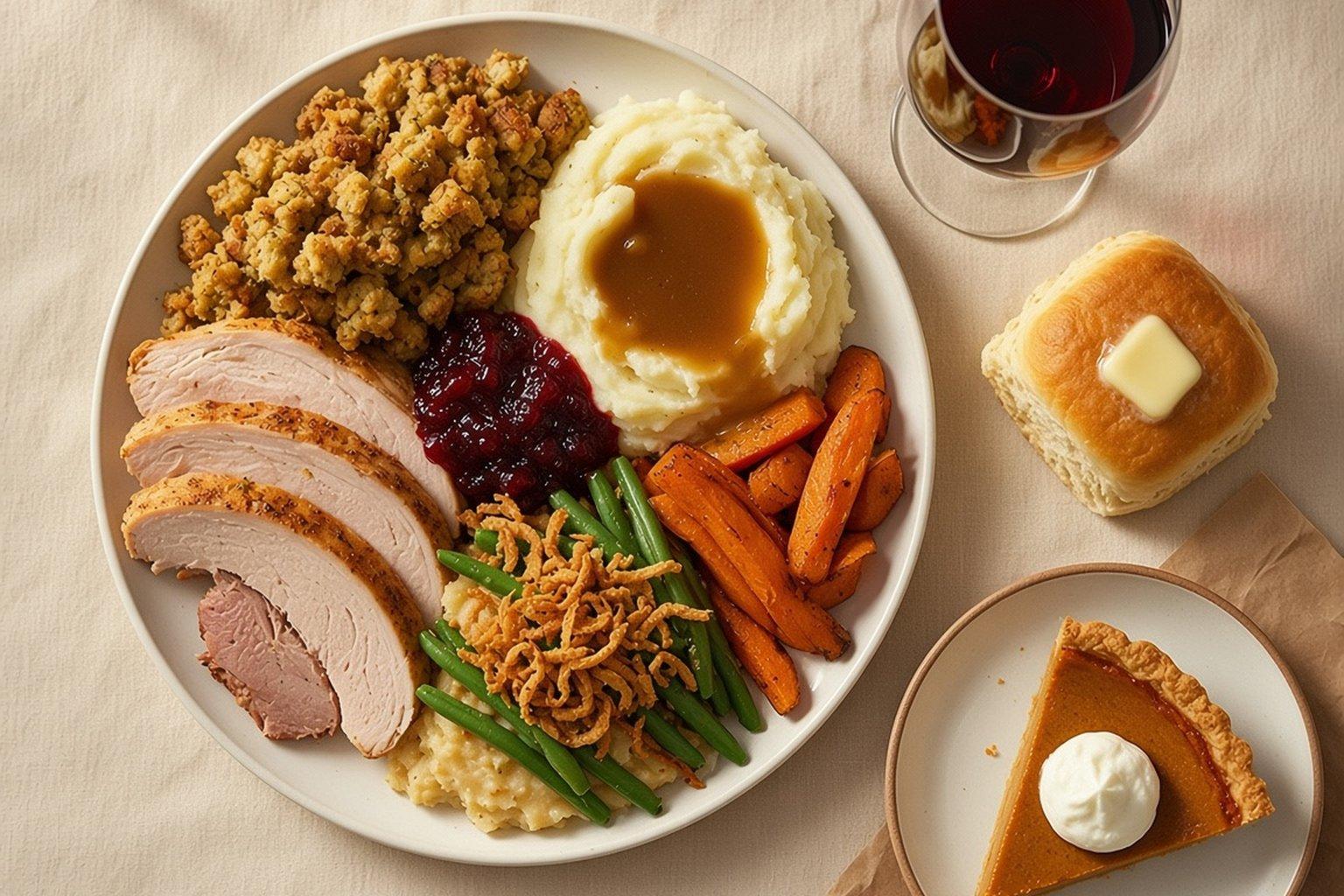
Thanksgiving is the one meal a year where nobody hands you a nutrition label, and the dishes come from a dozen different kitchens. You still can log it well. USDA’s FoodData Central lists survey values for nearly every dish on the table, with gram weights for a slice, a cup, or a pat. Add those up the way your plate actually looks and you get a number that is honest enough to work with.
How many calories are in a Thanksgiving dinner?
A generous single plate (6 oz of turkey with skin, 1 cup of stuffing, 1 cup of mashed potatoes, 1/2 cup of gravy, 1/4 cup of cranberry sauce, 1/2 cup each of green bean casserole and candied sweet potatoes, plus a roll with a pat of butter) comes to about 1,594 calories on USDA figures. Add a regular slice of pumpkin pie with whipped cream (443) and you are near 2,040. Two glasses of red wine put it around 2,340.
These are averages for typical recipes, not your aunt’s stuffing. A stuffing made with sausage, mashed potatoes loaded with butter and cream, or gravy built on pan drippings will run higher than the USDA survey foods. Treat the numbers below as a solid baseline, then nudge up for the richer versions you know are on the table.
Turkey is the lightest thing on the plate. The scoops around it are where the calories live.
Turkey calories: white vs dark, skin vs no skin
Roast turkey is lean protein in every version. The gap between white and dark, or skin and no skin, is real but small next to the sides.
| Roast turkey | 3 oz (85 g) | 4 oz (113 g) | Protein per 4 oz |
|---|---|---|---|
| White meat, no skin | 118 | 158 | 33 g |
| White meat, skin eaten | 144 | 192 | 32 g |
| Dark meat, no skin | 142 | 189 | 31 g |
| Dark meat, skin eaten | 172 | 229 | 30 g |
Eating the skin adds about 34 to 40 calories per 4 oz. Choosing white over dark saves about 30. If you are working toward a daily protein target, turkey is the part of the meal doing that job, so it is the last thing worth cutting.
Thanksgiving side dish calories
Sides are where portions drift. A “scoop” of stuffing from a serving spoon is often a full cup, and the cup is what USDA’s numbers scale from.
| Side | 1/2 cup | 1 cup | Notes |
|---|---|---|---|
| Bread stuffing | 177 | 354 | Densest common side; sausage versions run higher |
| Mashed potatoes (made with milk) | 143 | 285 | Extra butter or cream adds more |
| Candied sweet potatoes | 234 | 468 | The marshmallow-and-brown-sugar style |
| Sweet potato casserole or mashed | 124 | 248 | Less sugar than candied |
| Green bean casserole | 64 | 129 | Lightest classic side |
| Macaroni and cheese | 256 | 513 | Common at Southern tables |
| Poultry gravy | 58 | 115 | 1/4 cup is about 29 |
| Cranberry sauce | 223 | 445 | 1/4 cup is about 111; one canned slice about 80 |
Two things surprise people here. Cranberry sauce is mostly sugar, so a full 1/4 cup is about the same as a roll. And green bean casserole, the dish with fried onions on top, is the lightest side on the table at about 64 calories per 1/2 cup in the USDA survey version.
Rolls, cornbread, and butter
| Bread | Calories | Notes |
|---|---|---|
| Soft white dinner roll, medium (43 g) | 120 | Small roll (28 g) is about 78 |
| Butter, 1 pat (7 g) | 52 | 1 tablespoon is about 104 |
| Homemade cornbread, 1 piece (65 g) | 187 |
A roll with a real tablespoon of butter is about 224, which is more than 4 oz of white-meat turkey.
Pie and dessert calories
USDA treats a regular slice as 150 g, which is one eighth of an 8 to 9 inch pie. Restaurant and bakery slices often look more like the 250 g “large slice.”
| Pie | Small slice (75 g) | Regular slice (150 g) | Large slice (250 g) |
|---|---|---|---|
| Pumpkin | 187 | 374 | 623 |
| Apple | 222 | 444 | 740 |
| Pecan | 337 | 674 | 1,123 |
Whipped cream adds about 69 calories for a 20 g dollop, roughly half a cup of the fluffy kind. If you want two desserts, two small slices cost the same as one regular slice.
Wine and drinks
A 6 oz glass of red wine (180 g) is about 153 calories on the USDA entry (FDC 2710688). Two glasses over a long afternoon is about the same as a slice of pumpkin pie, and nobody counts the refills.
Example Thanksgiving plates
The full plate
- Turkey, 3 oz white and 3 oz dark, skin eaten (316)
- Bread stuffing, 1 cup (354)
- Mashed potatoes, 1 cup (285)
- Gravy, 1/2 cup (58)
- Cranberry sauce, 1/4 cup (111)
- Green bean casserole, 1/2 cup (64)
- Candied sweet potatoes, 1/2 cup (234)
- Dinner roll with a pat of butter (172)
Rough total: ~1,594 calories with about 68 g of protein. Pumpkin pie and whipped cream bring it to about 2,037. That is a full day for many people running a calorie deficit, in one sitting.
The same table, smaller scoops
- Turkey, 4 oz white meat, no skin (158)
- Bread stuffing, 1/2 cup (177)
- Mashed potatoes, 1/2 cup (143)
- Gravy, 1/4 cup (29)
- Cranberry sauce, 2 tablespoons (56)
- Green bean casserole, 1 cup (129)
Rough total: ~692 calories with about 44 g of protein. A small slice of pumpkin pie (187) brings it to about 879. Nothing was banned. The scoops just got smaller and the green beans got bigger.
Going back for seconds
A second round of 3 oz dark meat with skin, 1/2 cup each of stuffing and mashed potatoes, and 1/4 cup of gravy adds about 521 calories. Most second plates are the starch, not the turkey.
Swaps that actually move the number
- Pumpkin instead of pecan. Same regular slice, about 300 fewer calories (374 vs 674).
- Half a cup of stuffing, not a cup. Saves about 177 and you still get the stuffing.
- Sweet potato casserole without the candy topping. 1/2 cup of the plainer version is about 124 instead of 234.
- A pat of butter, not a tablespoon. 52 instead of 104 on the roll.
- Fill the gap with green beans and turkey. A full cup of green bean casserole is 129. Four ounces of white meat is 158 with 33 g of protein.
- Skip the skin if you want, but it is a small win. About 34 to 40 calories per 4 oz.
How to log Thanksgiving without ruining the day
One holiday meal will not undo a month of tracking, and a scale reading the next morning is mostly water and salt (more on that in why the scale jumps in a deficit). The goal is a reasonable log, not a perfect one.
- Log by dish, in cups. Picture the serving spoon. Most big spoon scoops are 1/2 to 1 cup.
- Log turkey by the slice. USDA counts a large or thick slice as about 3 oz.
- Round homemade dishes up. If you saw the butter go in, add 10 to 20 percent to the side. For the cooking side of that, see how to count calories when cooking.
- Count pie and drinks as separate lines. They are the easiest to forget and the easiest to estimate.
- Snap a photo of the plate before you eat. It is much easier to estimate portions later from a photo than from memory.
If you like to plan ahead, a lighter breakfast and lunch leaves room without skipping meals entirely. Our guide to how many calories each meal should be shows how to shift a budget across the day.
Where Countwell fits
Countwell is built for meals like this one: take a photo of the plate, get an AI estimate for each dish, then fix the stuffing to a cup and the pie to a regular slice. Food lookups run through FatSecret, so turkey, stuffing, and pumpkin pie are all searchable by name. Log the plate, enjoy the day, and pick the week back up on Friday.
Frequently asked questions
- How many calories are in a typical Thanksgiving dinner?
- On USDA FoodData Central figures, a generous plate of 6 oz turkey with skin, 1 cup stuffing, 1 cup mashed potatoes, 1/2 cup gravy, 1/4 cup cranberry sauce, 1/2 cup each of green bean casserole and candied sweet potatoes, and a buttered roll is about 1,600 calories. A regular slice of pumpkin pie with whipped cream adds about 440.
- How many calories are in Thanksgiving turkey?
- Four ounces of roast white meat without skin is about 158 calories with 33 g of protein. White meat with skin is about 192, dark meat without skin about 189, and dark meat with skin about 229 per 4 oz.
- How many calories are in a cup of stuffing?
- USDA's bread stuffing entry works out to about 354 calories per cup, or 177 per half cup. Versions made with sausage or extra butter will be higher.
- Which Thanksgiving pie has the fewest calories?
- Pumpkin. A regular 150 g slice (one eighth of an 8 to 9 inch pie) is about 374 calories, apple is about 444, and pecan is about 674 on USDA figures.
- What is the lowest calorie Thanksgiving side?
- Green bean casserole is the lightest classic side in USDA's survey data at about 64 calories per half cup. Gravy is also light at about 29 per quarter cup. Candied sweet potatoes and stuffing are the densest.
- Should I track calories on Thanksgiving?
- If tracking helps you, a rough log by dish and cup size is enough. One large meal will not undo weeks of progress, and a higher scale reading the next day is mostly water and sodium. Pick your normal routine back up the next day.