

Guides
Tracking Calories on Ozempic: A Practical Guide
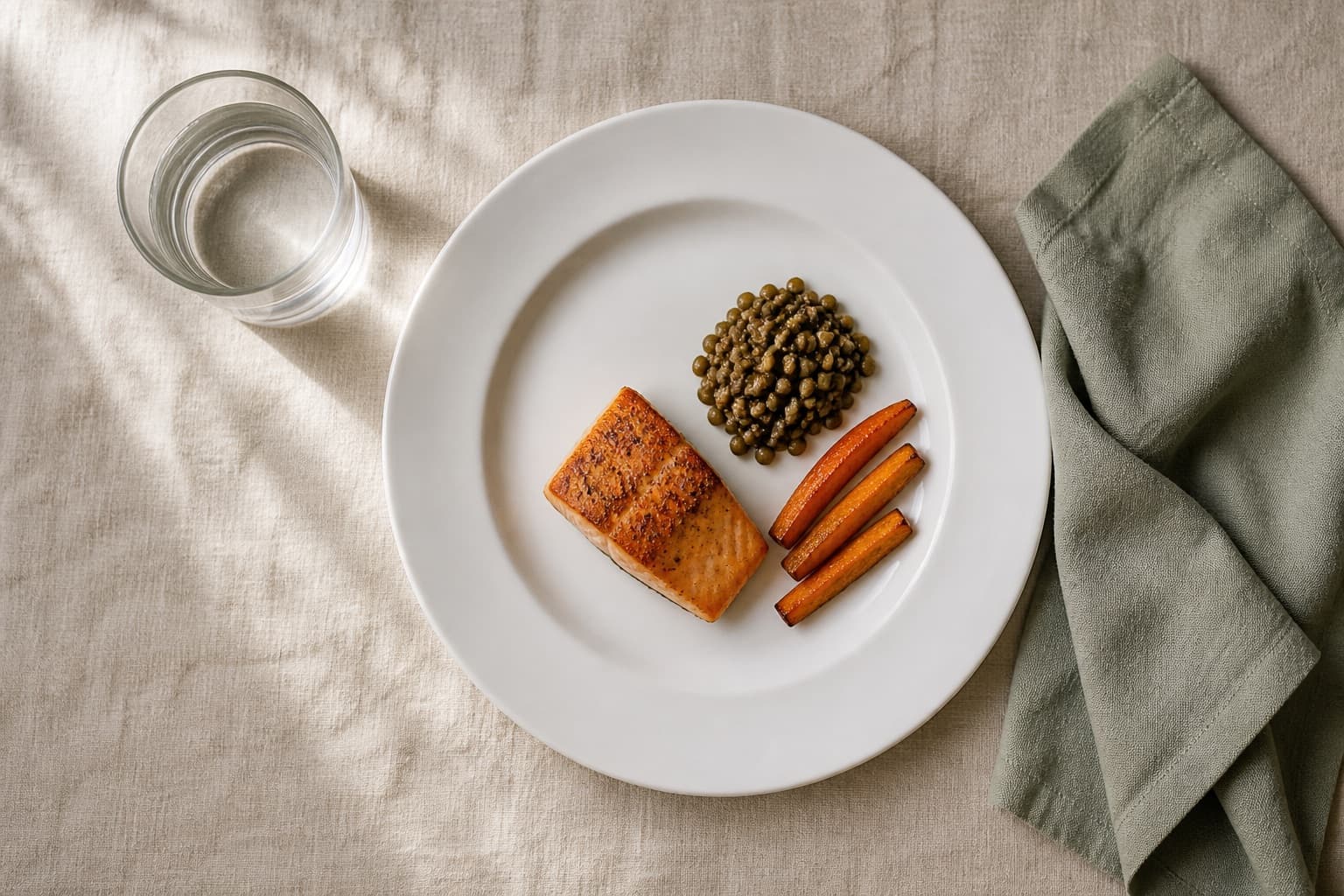
Tracking calories on Ozempic sounds like a contradiction. The medication is already doing the part that used to take willpower, so why log anything at all? Because on a GLP-1 the job of tracking changes. You are no longer using it to force a deficit. You are using it to confirm that the smaller amount you do eat still covers protein and nutrients, which is the part the medication does not handle for you.
Do you still need to count calories on a GLP-1?
Not to create the deficit. That happens without you. In a controlled trial of semaglutide 2.4 mg, ad libitum energy intake was 35 percent lower than placebo, and the 2025 joint advisory from the American College of Lifestyle Medicine, the American Society for Nutrition, the Obesity Medicine Association and The Obesity Society puts the range of observed calorie reductions at 16 to 39 percent. Appetite is not the obstacle it was.
So the risk runs the other way. When intake drops that far, the question stops being am I eating too much and becomes is what I am eating enough, and is it the right stuff. The advisory is blunt about the consequence: intakes below about 1,200 calories a day for women and 1,800 for men make it hard to get enough vitamins and minerals, with iron, calcium, magnesium, zinc and vitamins A, D, E, K, B1, B12 and C the ones to watch.
What changes about tracking when you are on a GLP-1?
The mechanics are identical. The purpose is not. Most tracking advice assumes you are fighting your appetite, which is no longer the situation you are in.
| Tracking without medication | Tracking on a GLP-1 | |
|---|---|---|
| The goal | Create a calorie deficit | Make a smaller intake count |
| The first number you check | Calories eaten | Protein, then calories |
| The main risk | Eating more than you think | Eating too little to cover your needs |
| A good day looks like | Comfortably under the target | Protein hit, floor cleared |
| Why you keep the log | Accountability | Evidence for you and your prescriber |
The medication handles eating less. Tracking is how you make sure what is left is worth eating.
Why does protein matter more on a GLP-1?
Because a meaningful share of what you lose is not fat. In the data summarized by the joint advisory, an average weight reduction of 13.6 kg broke down as 8.3 kg of fat mass and 5.3 kg of lean body mass, so roughly two of every five kilograms lost came from lean tissue.
Modeling in the same advisory suggests muscle accounts for 10 to 15 percent of total weight reduction in women and 20 to 25 percent in men when there is no structured strength training. That qualifier is the useful part. Protein intake and resistance training are the two levers with evidence behind them, and both are things you can see in a food log and a calendar.
How much protein should you eat on Ozempic or Wegovy?
The advisory recommends 1.2 to 1.6 grams of protein per kilogram of body weight per day during weight reduction, well above the 0.8 g/kg general recommended allowance, paired with strength training at least three times weekly and at least 150 minutes of moderate aerobic exercise a week. If grams per kilogram is not how your brain works, the simpler version it offers is 80 to 120 grams a day.
| Body weight | 1.2 g/kg per day | 1.6 g/kg per day |
|---|---|---|
| 130 lb (59 kg) | 71 g | 94 g |
| 150 lb (68 kg) | 82 g | 109 g |
| 175 lb (79 kg) | 95 g | 127 g |
| 200 lb (91 kg) | 109 g | 145 g |
| 225 lb (102 kg) | 122 g | 163 g |
| 250 lb (113 kg) | 136 g | 181 g |
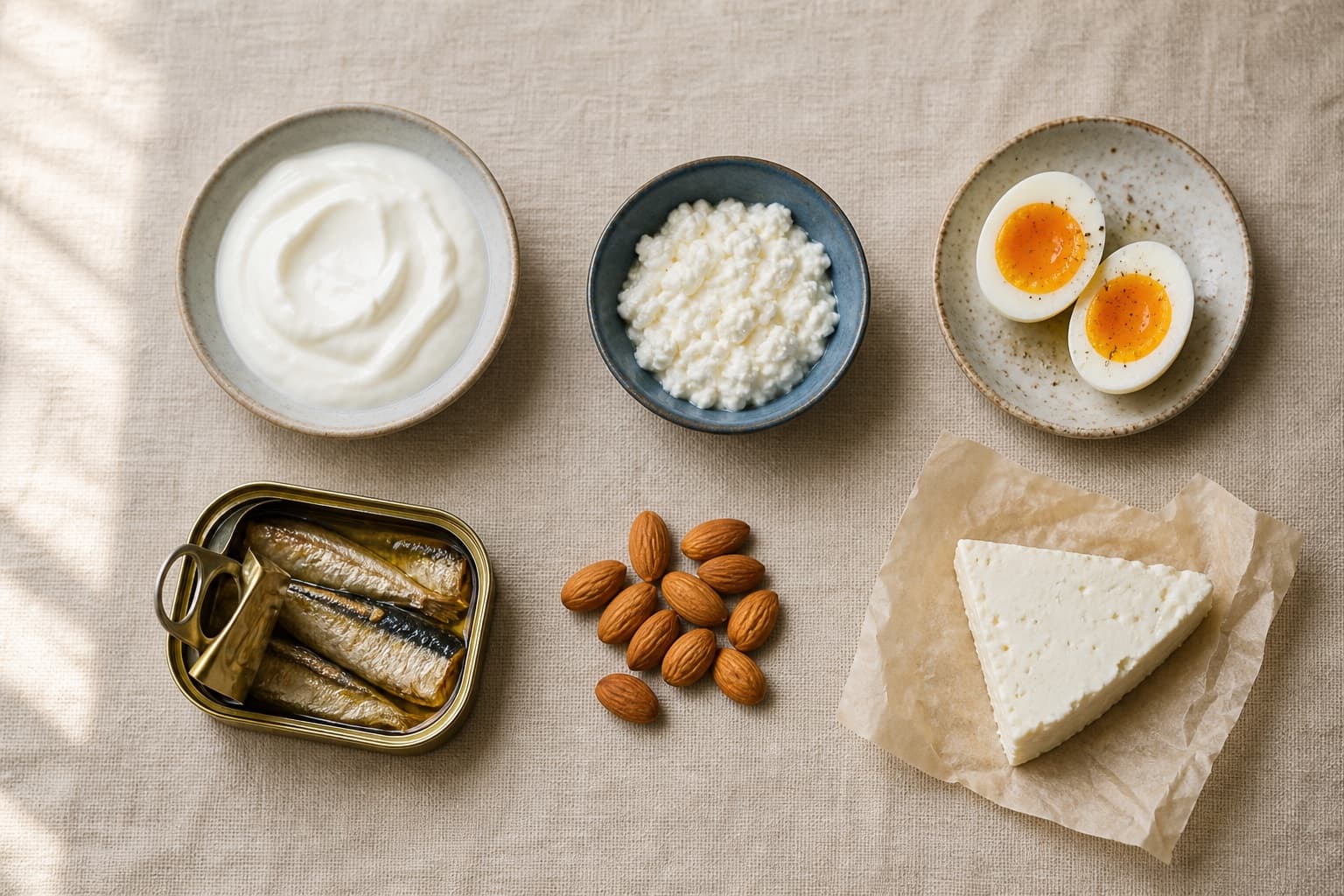
Hitting 110 grams is easy on 2,200 calories and genuinely hard on 1,300. That is the awkward part of eating on a GLP-1, and it is why the advisory points toward lower volume, nutrient dense protein: fish, eggs, Greek yogurt, cottage cheese, nuts and seeds. Our guide to daily protein has the gram counts for common foods if you want to build a short list you can rotate.
How do you know if you are eating too little?
Set a floor as well as a ceiling, then watch what the log tells you. The floor is the advisory’s threshold: roughly 1,200 calories a day for women and 1,800 for men, below which micronutrient adequacy gets difficult. If you want to know what your maintenance number actually is before you decide what a deficit looks like, our TDEE calculator gives you a starting estimate.
- Days under the floor. One is nothing. A run of them is worth raising with your prescriber.
- Protein missed repeatedly. The single most useful thing your log tells you on a GLP-1.
- Weight falling faster than expected. Rapid loss and low protein together are the combination that costs you muscle.
How do you log on the days you feel sick?
Loosely, but do log. Nausea is common: in the STEP 1 trial it affected 44.2 percent of people on semaglutide against 17.4 percent on placebo, usually mild and usually fading. The advisory’s practical advice for those days is smaller and more frequent: a small breakfast, then small meals every three to four hours, plenty of fluids, and going easy on fatty or high fiber foods in the first days of a new dose.
That eating pattern is miserable to log by hand, because six small things take six times the taps of one dinner. A photo scan is faster than typing when you feel rough, and an estimate you actually record beats a perfect entry you skip. It is worth knowing how accurate those estimates are so you can judge when to correct one and when to let it stand.
How should you set up a tracker for a GLP-1?
Five decisions, made once, and the log mostly runs itself after that:
- Set protein first, calories second. Pick your number from the table above and let the calorie target follow it rather than the other way around.
- Write down your floor. A ceiling you never reach is useless. The floor is the line that actually matters now.
- Front load protein. Appetite is usually best earlier in the day and in the days right before your next dose. Bank protein when eating is easy.
- Log the small days too. A day you barely ate is the most informative entry in the whole log, and the one people are most tempted to skip.
- Read the week, not the day. Weigh on a regular schedule and watch the trend, the same way you would read any run of daily weights.
None of this is exotic advice invented for the moment. The joint advisory tells clinicians that follow-up should include re-assessing dietary intake and hydration using food logs and food photos. A tracker is the version of that you can hand over at an appointment instead of trying to remember.
Should you keep tracking after you stop the medication?
Yes, and this is the part worth planning for early. In the STEP 1 extension, participants regained about two thirds of the weight they had lost in the year after withdrawal, as appetite returned. Nothing about that is a moral failing; it is what happens when the thing suppressing intake goes away.
The habits you build while the medication is doing the heavy lifting are what remain when it stops. If you already know what 110 grams of protein looks like on your plate, what your maintenance calories are, and what a normal week in your log looks like, you are working from data instead of memory. Our guide to running a calorie deficit covers the unmedicated version of the same problem.
Frequently asked questions
- Do you need to count calories on Ozempic?
- Not to create a deficit, because the medication reduces intake on its own. Tracking on a GLP-1 serves a different purpose: confirming that the smaller amount you eat still covers your protein and micronutrient needs, and giving your prescriber real data instead of recall.
- How many calories should you eat on a GLP-1?
- There is no single number, but there is a floor. The 2025 joint advisory from four obesity and nutrition societies notes that intakes below roughly 1,200 calories a day for women and 1,800 for men make it hard to meet vitamin and mineral needs. Estimate your maintenance calories first, then agree a target with your clinician.
- How much protein should you eat on Ozempic?
- The joint advisory recommends 1.2 to 1.6 grams per kilogram of body weight per day during weight reduction, or about 80 to 120 grams a day as a simpler rule. For a 175 lb (79 kg) person that is roughly 95 to 127 grams. Pair it with strength training at least three times a week.
- What if you cannot eat enough to hit your protein target?
- Shift to protein that comes in small volume: Greek yogurt, cottage cheese, eggs, fish, and shakes when solid food is unappealing. Spread it across small meals every three to four hours rather than trying to fit it into one sitting, and tell your prescriber if you are consistently falling short.
- Will tracking make the medication work better?
- It will not change how the drug works, but it changes what you get out of the weight you lose. Protein intake and strength training are the two levers with evidence behind them for protecting lean mass, and a log is how you find out whether you are actually pulling either one.
- Should you keep tracking after you stop taking a GLP-1?
- It helps. In the STEP 1 trial extension, participants regained about two thirds of their lost weight in the year after stopping, as appetite returned. Knowing your maintenance calories and what your normal week looks like means you notice the drift early instead of months later.